Designing with Delicacy: The Practical Value of Cute Magnolia Seamless Patterns
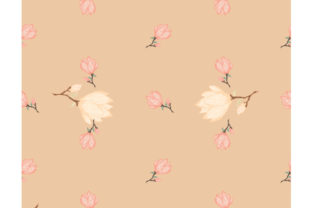
In the vast ecosystem of digital design assets, few elements bridge the gap between vintage charm and modern minimalism quite like floral motifs. Among these, the Cute Magnolia Seamless Pattern has carved out a specific niche for designers seeking softness without sacrificing professional polish. Unlike bold, high-contrast botanicals that demand attention, small cute magnolia designs offer a subtle texture that enhances rather than overwhelms. When sourced as a vector illustration, this asset becomes more than just a pretty picture; it transforms into a versatile tool capable of adapting to everything from luxury packaging to children’s stationery.
Understanding the technical and aesthetic nuances of this specific pattern type is essential for maximizing its utility. The inclusion of both EPS and JPG files in standard asset packs suggests a workflow designed for flexibility, yet many creators underutilize these formats. By exploring how these files function within contemporary design pipelines, we can better appreciate why this particular floral aesthetic remains a staple in creative libraries.
The Strategic Advantage of Vector Formats in Floral Design
When downloading a Cute Magnolia Seamless Pattern, the presence of a vector EPS file is arguably the most critical feature. While the JPG serves as an excellent preview or quick background for web use, the EPS (Encapsulated PostScript) file is where the true production value lies. Vectors are mathematically defined paths rather than pixel grids, meaning they possess infinite scalability. For a designer working on a business card today and a billboard tomorrow, this distinction matters immensely.
Consider the practical application in print design. A rasterized JPG of a small floral pattern might look crisp on a screen at 72 DPI, but when stretched across fabric or printed on high-gloss packaging, pixelation becomes inevitable. The vector EPS eliminates this risk entirely. More importantly, vectors allow for non-destructive editing. If a client loves the magnolia motif but requests a color shift from blush pink to sage green to match a seasonal rebrand, a vector file allows you to adjust global swatches in seconds. With a flattened JPG, you would be forced to use hue/saturation adjustments that often result in muddy colors and lost detail.
Customization Beyond Simple Resizing
The editable nature of vector illustrations extends beyond color. In a Cute Magnolia Seamless Pattern, individual elements are often grouped logically. This structure permits designers to isolate specific flowers, buds, or leaves to create new compositions. You might extract a single magnolia bloom to serve as a logo accent or rearrange the density of the pattern to create a border effect. This level of manipulation turns a single purchase into a comprehensive design system rather than a static background.
- Scalability: Resize from icon size to wall mural without quality loss.
- Color Control: Modify palette to match exact brand hex codes.
- Element Isolation: Extract individual flowers for standalone graphics.
- File Size Efficiency: Vectors often have smaller file sizes than high-res rasters for complex patterns.
Aesthetic Versatility Across Industries
The "cute" descriptor in small cute magnolia seamless pattern assets does not imply childishness. Instead, it typically refers to a stylized, approachable rendering that avoids the stiff formality of scientific illustration or the chaotic density of traditional baroque florals. This balanced aesthetic makes the pattern uniquely adaptable across diverse market sectors.
In the wedding and event industry, this pattern serves as a foundational texture for invitations, place cards, and signage. The softness of the magnolia complements typography without competing for legibility. Conversely, in the baby and nursery product market, the same pattern takes on a different role. Here, the gentle repetition and organic shapes provide visual stimulation that is calming rather than overstimulating. Designers in this space appreciate the gender-neutral potential of magnolias, especially when rendered in creams, greens, or muted yellows.
The cosmetics and skincare packaging industry also frequently leverages this motif. Magnolias are culturally associated with purity, femininity, and natural beauty. A seamless vector pattern allows packaging designers to wrap artwork around bottles, boxes, and tubes seamlessly. Because the pattern is tileable, there are no visible seams or awkward cutoffs, ensuring a premium unboxing experience. The ability to scale the pattern down significantly for small cosmetic jars while maintaining crisp lines is a direct benefit of the vector format.
Integrating Raster and Vector Workflows
While the EPS file offers superior editability, the included JPG file plays a vital supporting role in modern hybrid workflows. Not every project requires full vector manipulation, and loading heavy AI or EPS files can slow down software performance during the ideation phase. The JPG acts as a lightweight proxy.
Digital planners and tablet artists often prefer the JPG format for apps like Procreate or GoodNotes. These platforms handle raster images more efficiently for background layers. Using the provided JPG allows for rapid prototyping of digital stationery templates. Once the layout is approved, the designer can switch to the vector EPS for the final export if high-resolution printing is required. This dual-file approach respects the reality of multi-platform design, acknowledging that creators move fluidly between Adobe Illustrator, Photoshop, and iPad-based applications.
Technical Considerations for Seamless Tiling
One common factor designers must evaluate before adopting any seamless pattern is the integrity of the tile. A true Cute Magnolia Seamless Pattern should repeat perfectly on both the X and Y axes. When using the vector file, it is advisable to test the tiling immediately upon opening. Create a rectangle three times the width and height of the pattern swatch and apply the fill. Inspect the intersections closely.
Sometimes, conversion processes or older legacy files can introduce microscopic gaps or overlapping anchor points at the seam lines. Identifying these issues early prevents costly reprint errors later. Furthermore, understanding the scale of the original artboard is crucial. A pattern designed on a 100mm x 100mm artboard will behave differently when applied to a large-format printer than one designed on a 500mm x 500mm canvas. Always verify the physical dimensions of the vector artboard to ensure the floral scale matches your intended output size.
- Open the EPS file in your preferred vector editor.
- Check the artboard dimensions to understand the base scale.
- Create a test grid to verify seamless tiling integrity.
- Ungroup elements to test color customization capabilities.
- Export a low-res JPG proof for client approval before finalizing vector edits.
Evaluating Quality Before Implementation
Not all floral vectors are created equal. When selecting a small cute magnolia seamless pattern, scrutinize the curve quality. Magnolias are defined by smooth, fleshy petals. Poorly digitized vectors often exhibit jagged edges or excessive anchor points that make the flower look mechanical. High-quality illustrations use bezier curves efficiently, resulting in smooth lines that render beautifully at any size.
Additionally, consider the negative space. A well-designed seamless pattern balances positive floral elements with adequate breathing room. Patterns that are too dense can become visually noisy when scaled down or printed on textured paper. The "cute" aesthetic relies heavily on this balance; overcrowding destroys the delicate charm that defines the style. Look for patterns where the whitespace is as intentional as the botanical elements themselves.
Finally, assess the layer organization within the EPS file. Professional-grade assets separate backgrounds, stems, leaves, and blooms into distinct layers or groups. This organizational hygiene saves hours of prep time. If you have to manually lasso and regroup scattered petals just to change a color, the asset’s practical value diminishes significantly. Prioritize files that demonstrate respect for the end-user’s workflow, as this indicates a higher overall quality of craftsmanship.
Modern Applications in Digital and Physical Products
The resurgence of cottagecore and soft girl aesthetics in social media content creation has given the Cute Magnolia Seamless Pattern renewed relevance. Content creators use these patterns as overlays for Instagram stories, Pinterest pins, and blog headers. The vector format allows influencers to resize the pattern to fit various aspect ratios without cropping out key floral details. This adaptability ensures brand consistency across platforms with vastly different dimensional requirements.
In the realm of physical products, print-on-demand services have democratized access to custom merchandise. Designers can now apply small cute magnolia patterns to phone cases, tote bags, and throw pillows without holding inventory. However, POD services have strict resolution and color profile requirements. Starting with a vector EPS ensures you can export CMYK PDFs for textile printing and RGB PNGs for hard goods, all from the same source file. This versatility reduces the need to maintain multiple versions of the same artwork, streamlining the product development cycle.
Ultimately, the enduring appeal of this pattern lies in its emotional resonance combined with technical robustness. It evokes feelings of spring, renewal, and gentleness, while the vector format provides the structural integrity demanded by professional production. Whether you are designing a boutique wedding suite or a mass-market skincare line, the combination of aesthetic warmth and functional flexibility makes this asset a reliable choice for contemporary creatives.