Circle Flyer Leaf Line: Evaluating Abstract Vector Layouts for Professional Design
In the competitive landscape of visual communication, finding a balance between organic aesthetics and structured corporate messaging is a persistent challenge for designers and marketers. The Circle Flyer Leaf Line collection addresses this specific niche by offering a set of abstract vector layout backgrounds that merge natural motifs with geometric precision. Rather than relying on literal photography or chaotic illustrative styles, these assets utilize line art and circular compositions to create versatile templates suitable for a wide range of print and digital media. For professionals managing high-volume output or seeking a cohesive brand identity across multiple touchpoints, understanding the practical utility of this vector set is essential for efficient workflow integration.
Defining the Asset: Structure Meets Organic Form
At its core, the Circle Flyer Leaf Line is not merely a collection of decorative elements; it is a structural design system. The assets are categorized under science and nature, yet their application leans heavily toward modern graphic design principles. The defining characteristic is the use of continuous line work to depict foliage, tropical plants, and organic shapes within a constrained circular or rounded framework. This approach transforms potentially wild or exotic jungle concepts into controlled, reproducible graphics that function effectively as background textures, title frames, or central focal points.
The vector format ensures that these layouts remain crisp at any scale, from a small business card to a large-format banner. Unlike rasterized images that degrade upon resizing, these illustrations maintain mathematical precision. The "leaf line" concept specifically refers to the minimalist rendering style, where negative space plays as significant a role as the stroke itself. This makes the designs exceptionally adaptable for overlaying text, logos, or data visualization without creating visual clutter. The abstraction allows the viewer to perceive a natural theme without the distraction of photorealistic detail, making it ideal for contexts requiring a clean, professional, yet approachable tone.
Practical Applications Across Media Types
The true value of this collection lies in its cross-platform flexibility. Professionals evaluating this asset should consider its performance across various standard formats. The circular geometry naturally suits social media avatars and digital badges, but the inclusion of A4 and booklet-ready variations extends its utility to traditional print media.
- Corporate Stationery and Reports: The abstract nature of the leaf line patterns provides a subtle texture for annual reports, white papers, and internal memos. It adds visual interest to otherwise dense textual documents without compromising readability or appearing unprofessional.
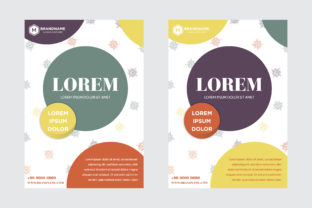
- Marketing Collateral: For flyers, brochures, and promotional posters, the set offers pre-arranged compositions that guide the eye. The circular elements can serve as containers for product photography or key statistics, creating a clear visual hierarchy.
- Event and Hospitality Signage: The tropical and paradise undertones make these vectors particularly effective for summer campaigns, travel agencies, or wellness brands. However, because the style is linear and abstract, it avoids looking cliché or overly casual, maintaining a premium feel suitable for upscale venues.
- Digital Presentations: Slide decks often suffer from generic stock imagery. These vector backgrounds provide a consistent thematic thread throughout a presentation, allowing for smooth transitions between title slides, content lists, and closing remarks.
Evaluating Visual Quality and Customization Potential
When integrating third-party assets into professional projects, quality assessment goes beyond aesthetic appeal. One must evaluate the technical construction of the vectors. In the Circle Flyer Leaf Line set, attention should be paid to node efficiency and layer organization. Well-constructed vectors in this category typically feature grouped elements, allowing designers to isolate specific leaves or lines without breaking the overall composition. This modularity is critical for customization.
Color flexibility is another significant factor. While many assets in this genre default to green or pastel palettes to emphasize the nature theme, the vector format allows for complete recoloring. This capability is vital for brand compliance. A marketing team can shift the palette from a lush jungle green to a corporate blue or a vibrant gradient without losing the integrity of the illustration. Furthermore, the line-based style responds well to opacity adjustments and blending modes, enabling designers to create watermarks or subtle overlays that add depth to solid color blocks.
However, users should be mindful of complexity. Some abstract botanical patterns can become visually heavy if scaled down too aggressively. Testing the assets at the intended final output size is a necessary step in the evaluation process. The strength of this specific style is its reliance on flow and rhythm; if the lines become too thin or the spacing too tight during reduction, the organic feel may collapse into visual noise.
Audience Fit and Strategic Implementation
Not every project requires an abstract botanical vector set. Identifying the right audience fit prevents wasted resources and ensures the asset enhances rather than detracts from the message. This collection is most valuable for creators who need to bridge the gap between scientific accuracy and creative expression.
Ideal User Profiles
- Environmental and Scientific Organizations: Entities communicating research on botany, ecology, or sustainability benefit from imagery that feels rooted in nature while maintaining academic rigor. The abstract line work suggests analysis and structure rather than mere decoration.
- Wellness and Lifestyle Brands: Spas, yoga studios, and organic product lines often require visuals that evoke tranquility and growth. The circular motifs symbolize wholeness and cycles, aligning perfectly with holistic brand narratives.
- Freelance Designers and Agencies: For professionals handling multiple clients, having a reliable library of neutral yet thematic templates accelerates production time. These assets serve as excellent starting points for mockups and concept pitches.
- Educational Publishers: Textbooks and learning materials covering biology or geography can use these layouts to break up text and illustrate concepts like photosynthesis or plant anatomy in a stylized, engaging manner.
Situational Limitations
While versatile, the Circle Flyer Leaf Line aesthetic has boundaries. It may not be suitable for industries requiring stark industrial minimalism or high-tech futurism, where organic curves could send mixed signals. Additionally, if a project demands specific botanical accuracy—such as identifying distinct species for a field guide—the abstract nature of these line drawings renders them inappropriate. They convey the idea of nature, not the taxonomic reality. Users must distinguish between decorative atmosphere and informational illustration.
Workflow Integration and Long-Term Value
Adopting this type of vector set should be viewed as a long-term workflow optimization rather than a one-off purchase. The consistency of style across the collection allows for the development of comprehensive brand kits. A designer can establish a visual language using these leaf lines for a client’s flyer, then seamlessly extend that same language to their website headers, email signatures, and packaging labels. This coherence builds brand recognition and trust over time.
From a production standpoint, the template-ready nature of these files reduces the cognitive load during the design phase. Instead of drawing organic shapes from scratch—a time-consuming process requiring specialized illustration skills—designers can focus on typography, layout balance, and content strategy. The pre-established compositions solve common spatial problems, such as how to frame a title on an A4 page or how to add interest to a blank corner of a brochure.
Reliability also stems from the timeless quality of line art. Unlike trendy 3D renders or hyper-specific photographic styles that may date quickly, minimalist vector illustrations tend to have a longer shelf life. Investing in high-quality abstract sets like Circle Flyer Leaf Line provides a sustainable resource that remains relevant through shifting design trends. For businesses and creators prioritizing efficiency, consistency, and a sophisticated natural aesthetic, this asset class represents a pragmatic solution to complex visual communication needs.
Making the Final Assessment
Ultimately, the decision to utilize the Circle Flyer Leaf Line collection should be based on specific project requirements and brand alignment. Evaluate the assets not just for their immediate beauty, but for their functional adaptability. Check the file organization, test the scalability, and verify that the abstract style supports your content goals. When applied correctly, these vectors do more than decorate; they organize information, evoke emotion, and streamline the creative process. For the discerning professional, they offer a reliable intersection of art and utility, proving that even the most organic concepts can be structured for maximum commercial and communicative impact.